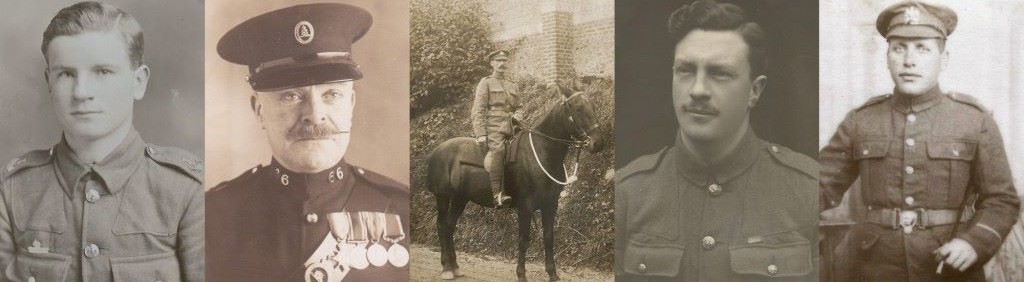
This article is about the Ari Burnu Cemetery, ANZAC and is one of a number of articles I have written about Gallipoli. I have also written guides to help you research soldiers who served in the British Army during the First World War:
Ari Burnu Cemetery, ANZAC
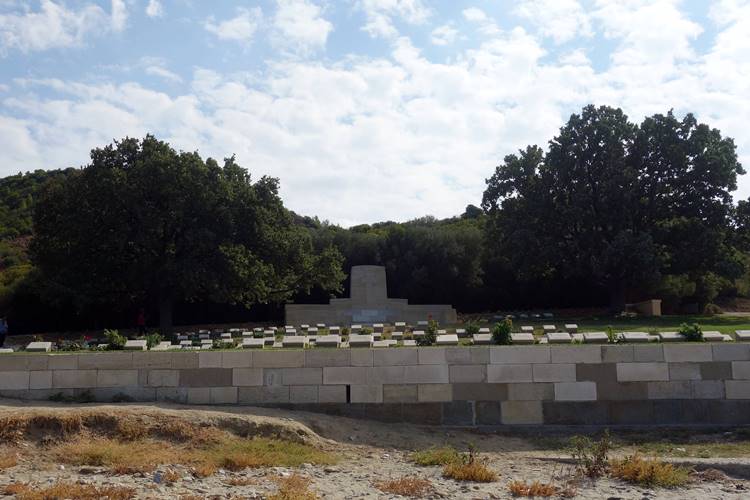
The Ari Burnu Cemetery is one of the most scenic and picturesque Commonwealth War Grave Commission cemeteries on Gallipoli. The Ari Burnu Cemetery contains the graves of 252 Commonwealth servicemen who died during the Gallipoli Campaign or after the war when Allied forces occupied the area. Of the 252 graves, 42 are unidentified, though there are five special memorials to soldiers who are believed to be buried in the cemetery. The soldiers who are buried in the cemetery died throughout the campaign and contain men from Australia, Britain and New Zealand. There are also three graves to Indian soldiers (discussed below) and a grave to a member of the Maltese Labour Corps.
The photograph above was taken from North Beach, just past ANZAC Cove and there are steps from the beach to the cemetery. There is also a path, which is sign posted, leading down from the main road which goes past ANZAC Cove. If you visit the cemetery walk down the steps onto the beach and turn right, as you walk down you’ll see a pill box dating from after the war. Near the pillbox is a small shipwreck dating from the Gallipoli Campaign which can be fully exposed depending on the tide.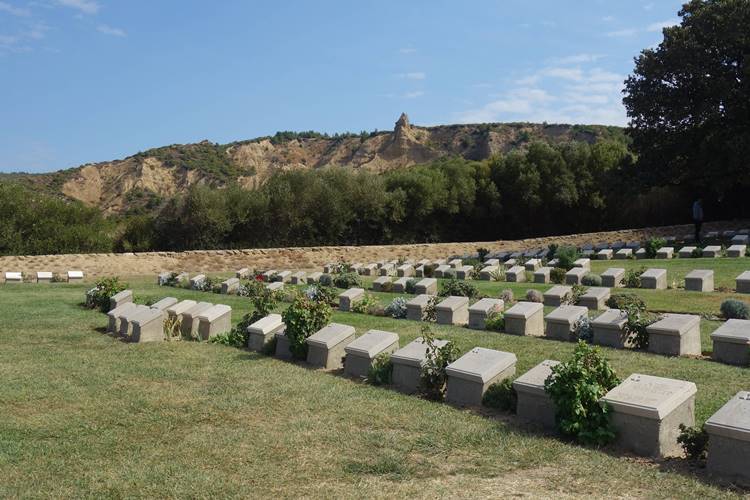 In the photograph above you can see the well-known Gallipoli landmark, the Sphinx, protruding from the clifftop. The Ari Burnu Cemetery was one of only two cemeteries I visited where I saw other people during a trip in October 2016. Most of the time you will have the cemeteries to yourself, especially if you are visiting Helles or Suvla.
 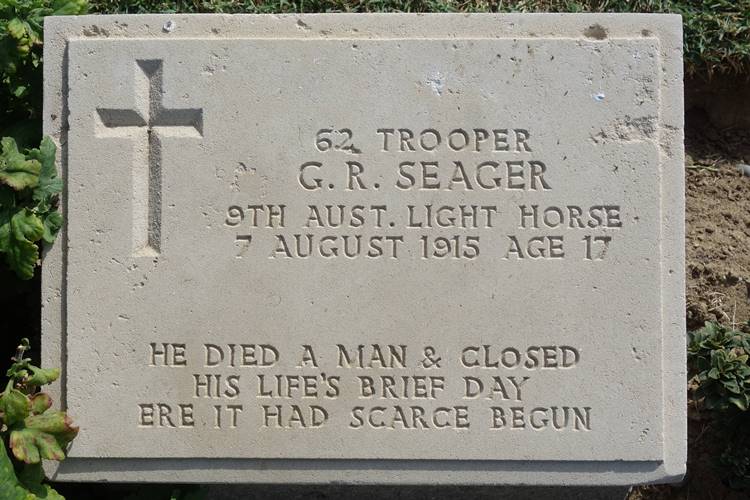 I found the epitaph to Trooper George Rothwell Seager, 9th Australian Light Horse to be particularly moving. George had resigned from the Australian Navy to join the army in 1914 and his two brothers also served at Gallipoli and survived the war. You can read George’s service file by clicking on this link: George Rothwell Seager. Notice how George gave the wrong age when he enlisted.
 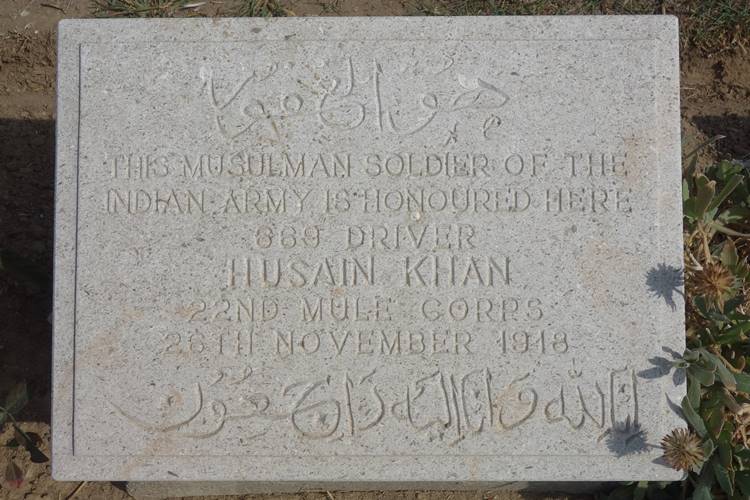 The Ari Burnu Cemetery also contains three Indian soldiers who were initially buried at the Anglo-French Cemetery at Kilid Bahr (Kilitbahir). They are:
- Driver Alla Ditta, 22nd Mule Corps attached 3rd Cavalry Brigade who died on 20 November 1918.
- Driver Husain Khan, 22nd Mule Corps attached 3rd Cavalry Brigade who died on 26 November 1918.
- Driver Iman Din, 22nd Mule Corps attached 3rd Cavalry Brigade who died on 20 November 1918.
These men would have died either from illness or accidents, from the dates they likely died of Spanish flu, when they served with the Allied forces which occupied the Dardanelles after the war.