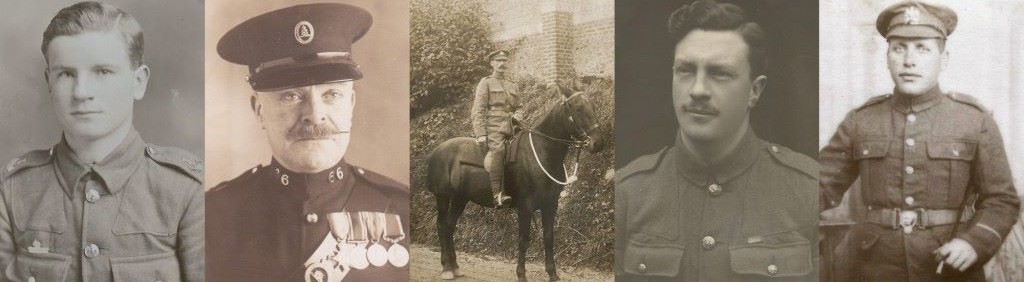
This article looks at the 1st Garrison Battalion The Royal Scots (Lothian Regiment) and will help you to research those who served with the Battalion during the First World War. In addition, I have written a series of articles to help you research soldiers who served in the British Army during the war:
The 1st Garrison Battalion The Royal Scots (Lothian Regiment)
The 1st Garrison Battalion The Royal Scots (Lothian Regiment) was formed at Redford Camp, near Edinburgh, Scotland on 11 August 1915. For the first week of its existence, the Battalion was commanded by Major H. Stone of the 4th Battalion Highland Light Infantry. On 18 August, Stone was replaced by Colonel Frederick John Brown C.B. who had been brought out of retirement to command the Battalion. Brown had been a career army officer who had commanded the 2nd Battalion The Essex Regiment. The Battalion was formed of drafts from the following Scottish battalions:
- 3rd Battalion The Royal Scots (Lothian Regiment): Captain E. C. Hill-Whitson, Lieutenant George Maxwell Vereker Bidie and 82 other ranks
- 3rd Battalion The Royal Scots Fusiliers: Captain F. C. Hunter Blair, Second Lieutenant C. Norfolk and 85 other ranks
- 3rd Battalion The King’s Own Scottish Borderers: Captain Henry Keswick, M.P., Lieutenant A. J. Hawkins and 91 other ranks
- 3rd and 4th Battalions The Cameronians (Scottish Rifles): Major A. F. Douglas, Captain A. McG. Macdonald, Lieutenant J. W. McEwan, Second Lieutenant R. E. R. Macdonald and 162 other ranks
- 3rd and 4th Battalions The Highland Light Infantry: Lieutenants J. A. Ferrers Guy and L. A. Judd, Second Lieutenants W. D. M. Strettell, H. McL. Scott and 180 other ranks
- 3rd and 4th Battalions Princess Louise’s (Argyll and Sutherland Highlanders): Lieutenant A. G. Speirs, Second Lieutenants K. C. Ferguson, A. J. Rankine, R. S. Fitchie and 87 other ranks
- 3rd Battalion The Gordon Highlanders: Captain P. Duguid, Second Lieutenant S. R. Robertson and 92 other ranks
- 3rd Battalion The Queen’s Own Cameron Highlanders: Captain H. M. Warrand, Second Lieutenant H. B. Mackenzie and 44 other ranks
- 3rd Battalion Seaforth Highlanders (Ross-shire Buffs, The Duke of Albany’s): Captains C. P. Radcliffe and W. F. Arbuthnot and 80 other ranks
- 3rd Battalion The Black Watch (Royal Highlanders): Captain T. H. C. Cox, Second Lieutenant J. A. Inglis and 52 other ranks
On 6 September 1915, the Battalion moved to Stobs Camp, near Hawick and during the month, 78 men left the Battalion for munitions work. A travelling medical board declared 198 other ranks as being unfit for service abroad on 6 October and these men were quickly replaced by new drafts. The outdated Lee-Metford rifle was issued to the Battalion early in the month. On 23 October, the Battalion left Stobs Camp for Devonport where they arrived the next day and embarked on board the Hired Transport Empress of Britain. Over 5,000 soldiers were packed on board the ship which sailed for 24 October for Lemnos which was reached on 4 November after a short halt at Malta. Lemnos is a Greek island in the Aegean where the Allies established a base during the Gallipoli Campaign.
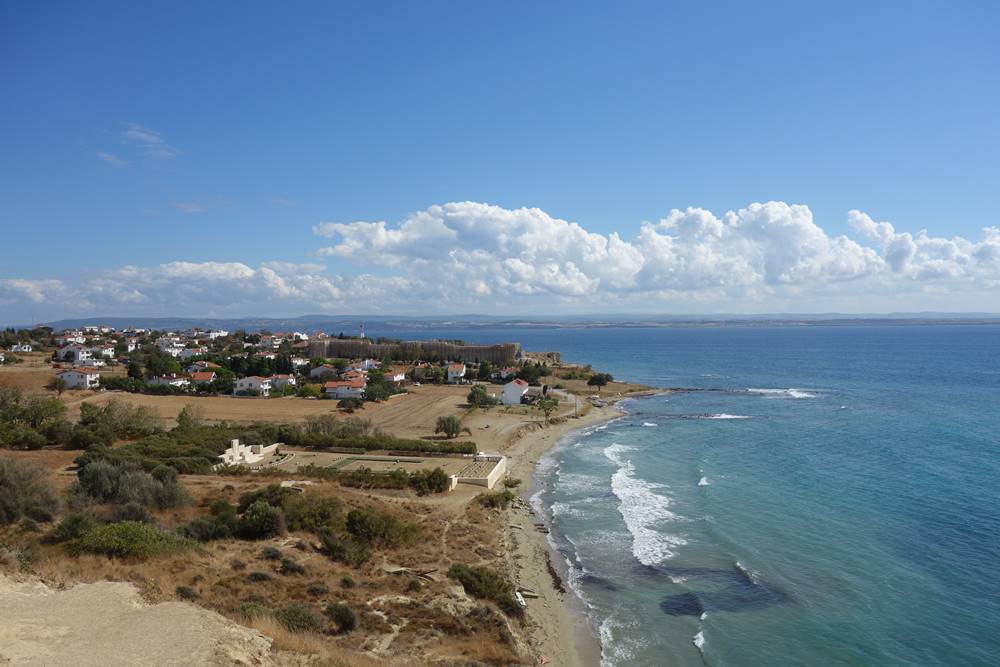
On 8 November, ten officers and 400 other ranks of the Battalion were sent to Cape Helles on Gallipoli. Cape Helles is shown below along with V Beach Cemetery. Only the strongest of the Battalion were chosen to head ashore, with the SS Newmarket embarking the men directly from the Empress of Britain. The rest of the Battalion landed at East Mudros (Moudros), a port on Lemnos on 9 November. Many of the men were quickly invalided back to Britain after the strain of unloading the ship’s stores onto the island. While this was taking place on Lemnos, the men sent to Gallipoli were given the task to “unload all sorts of stores out of the lighters and carry them up the sloping beach of the supply depots, where protecting guards were also furnished by our men”. The unit suffered dozens of casualties on Gallipoli as it was constantly under shell fire. One of those killed by a shell was Second Lieutenant James Thomson Rankin on 23 December who is buried in the Lancashire Landing Cemetery.
 There were also a couple of air raids on Lemnos during this period but no casualties were sustained by the Battalion. The detachment working at Cape Helles was withdrawn piecemeal in late December and early January 1916. On 4 February, the Battalion embarked on board the Empress of Britain which sailed for Alexandria, Egypt the next day. Disembarking on 6 February, the Battalion moved to Sidi Bishr Camp, “about 9 miles from Alexandria”. On 27 February, No.3 Company under the command of Captain P. Dunn left for Cyprus where it was stationed at Limassol with a detachment at Famagusta. The rest of the 1st Garrison Battalion remained at Alexandria where it moved into a defensive position in the city in early March. On 23 September 1916, the 24 officers and 800 other ranks of the Battalion were distributed as follows:
- 5 officers and 218 other ranks at Cyprus
- 8 officers and 395 other ranks on dock defences at Alexandria
- 11 officers and 187 other ranks with the Headquarters at Ras-el-Tin, Alexandria
On 21 October, the Headquarters, No.4 Company and a draft of 155 other ranks which had arrived the same day, embarked on board the Elele for Cyprus. The soldiers were escorting 1300 Turkish prisoners of war. After an uneventful voyage, the Elele docked at Famagusta and the soldiers disembarked. No.2 Company which had been left behind in Alexandria arrived later in the month. This left No.1 Company and the unit’s details in Alexandria. Though the number dwindled to just 54 other ranks by May 1917, as more soldiers were sent to Cyprus. While on the island, the Battalion guarded the prisoner of war camp and a variety of other locations. The photograph below shows three soldiers of the Battalion, all seated in the front row and wearing Glengarries, at Famagusta prisoner of war camp. It was dated 26 January 1917. Seated second from left is Private Henry Miller who was born in 1874 and had served with the 1st Battalion Royal Scots in South Africa between 1899 and 1902. On the outbreak of war, he reenlisted and due to his age was sent to serve with the 1st Battalion which contained many soldiers aged over forty. My thanks to Neil Smith who has kindly let me use this photograph.
 On 8 April 1917, the Regimental Provost Sergeant Edward Dickenson was murdered with the war diary reporting:
8 April 1917: At 2:30 am the Regimental Provost Sergeant, Sergeant E. Dickenson was murdered in Famagusta while in the execution of his duty. He was searching for absentee soldiers and came across one in a house there. The man resisted arrest and a struggle ensued in the course of which the Sergeant was stabbed in the groin so that the femoral artery was severed and he died in a few minutes. He was buried the following day at 11 am in the cemetery outside Varoshia.
On 20 June, a draft of 4 Corporals and 107 other ranks, considered fit enough for general service, were sent to join the 1/7th Battalion Royal Scots in Egypt. More men were sent to join other battalions but the drafts were a lot smaller in number. Soldiers were also sent back to Alexandria and by 31 January 1918, the detachment was twenty officers and 628 other ranks in strength. The Battalion’s largest loss of life occurred on 20 July when the Kosseir carrying seventeen soldiers to Cyprus from Alexandria was torpedoed:
On 20th July 1918 a party of 16 Privates under command of Sergeant Tannahill embarked on the mail steamer Kosseir for the passage to Cyprus. When about 40 miles from Alexandria the steamer was torpedoed by an enemy submarine and sank in about 3 minutes. All our men were thrown into the sea and Sergeant Tannahill and Private Bruce were rescued next day by a patrol boat.
Ten of the dead are commemorated on the Jerusalem Memorial, three on the Chatby Memorial and Private Robert Moore is buried in the Alexandria (Hadra) War Memorial Cemetery. On news being received at Famagusta of the Armistice on 11 November 1918, “The pipes and drums at once turned out and headed a procession of the men marching around the camp and cheering”. Celebrations continued into the next day. Soldiers began to leave the Battalion in large numbers from January 1919 to proceed to Britain for demobilization. On 24 June, what was left of the 1st Garrison Battalion on Cyprus sailed for Port Said, Egypt where it arrived two days later. From the port, the Battalion travelled to Alexandria where by the end of July 1919, its strength had dwindled to sixteen officers and 126 other ranks. The 1st Garrison Battalion The Royal Scots was disbanded later in the year.
Researching Soldiers who Served in the 1st Garrison Battalion The Royal Scots (Lothian Regiment) in the First World War
Start by looking at my generic guides to researching soldiers who served in the British Army during the First World War. Those covering medal and service records will be the most important starting points. I also have a page on common abbreviations and acronyms as you’ll encounter a lot of jargon in your research.
Officers: A service record is the most important document to find and if it survives, it will either be held at the National Archives in London or by the Ministry of Defence. I’ve written a detailed guide on finding a service record. As many officers who served with the 1st Garrison Battalion were called out of retirement, it’s worth looking at army lists and searching for them in the London Gazette. Local newspapers are also a useful source and I’d recommend searching the British Library’s newspaper archive which can be viewed on Findmypast. Officers frequently appear in the unit’s war diary which is discussed below.

Other Ranks: The key document to view is a service record but many were destroyed in the Blitz. I’ve written a detailed guide on how to search for one. There will be at least two surviving medal records if a soldier served with the Battalion abroad, a medal index card and corresponding medal roll. If a soldier qualified for the 1914-15 Star, there will be two medal rolls to find. The 1st Garrison Battalion didn’t have a separate numbering system but drew its regimental numbers from the same block as other battalions of the Regiment. Due to the age and health of those who served with the unit, I’d recommend searching the pension records held by the Western Front Association which can be viewed on Fold3.
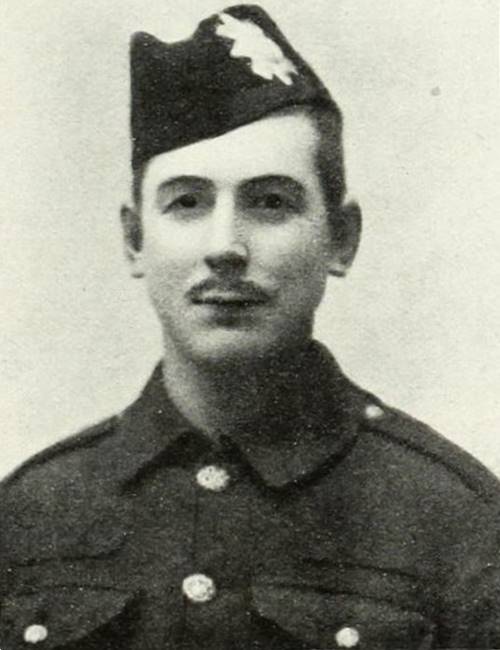
This photograph of Private William Stanley Martin of the 1st Garrison Battalion was published in the Hillhead High School War Memorial Volume. William was typical of the type of soldiers who served with the unit. He had previously served for nine years in the 9th Battalion Highland Light Infantry, a Territorial Force unit, and re-enlisted in September 1914. As he wasn’t in the best of health, he remained in Britain until being posted to the 1st Battalion in December 1917. He died of pneumonia following a bout of influenza in the No.17 General Hospital in Alexandria on 10 January 1919 and is buried in the Alexandria (Hadra) War Memorial Cemetery. There is usually more information available for a soldier who died during the war than those who survived. Important sources of information include the Commonwealth War Graves Commission’s website, Soldiers Died in the Great War, the Army Register of Soldiers’ Effects and local newspapers.
War Diary of the 1st Garrison Battalion The Royal Scots (Lothian Regiment)
There is one war diary for the 1st Garrison Battalion which is held at the National Archives in London. A war diary was a unit recorded which recorded its location and activities and was written by one of its officers. The Battalion’s war diary hasn’t been digitized and can only be viewed on site.
- Date: 11 August 1914 – 30 July 1919
- Reference: WO 95/4416
- Notes: This is a good war diary for a garrison battalion which are usually very poor. The period between August 1914 and January 1917 is typed and twenty-one pages in length. There is a list of officers who embarked with the Battalion for Lemnos in October 1915 and officers are mentioned throughout. From February 1917, the entries are a lot shorter though there are some detailed accounts especially when Turkish prisoners of war escape on Cyprus. The distribution of the Battalion was often recorded, along with the arrival and departures of drafts.
Further Sources for 1st Garrison Battalion The Royal Scots (Lothian Regiment)
There is a three-page extract from the personal war diary of Colonel Frederick John Brown who commanded the Battalion throughout the war which appears as Appendix III in The Royal Scots 1914-1919 by Major John Ewing, M.C. Brown wrote a memoir, Service with the 56th Regiment and 2nd Battn. The Essex Regiment Pompadours, which includes an account of his command. The manuscript was never published and was once in the possession of Peter Harrington, the well-known bookseller. In their catalogue description, Harrington’s recorded that Brown devoted 65 pages to the 1st Garrison Battalion, which was reported to be “a succinct, but engaging account of their involvement in campaigns around the Mediterranean”. At the end of the manuscript, there were “full returns of casualties, officer, NCOs and other ranks”. Unfortunately, I don’t know where the manuscript is!